

Riddick3001
European 🇪🇺
- 11 Posts
- 33 Comments

 4·15 days ago
Anything new on visa, diploma and workers migration stuff ( the movement of EU and Canadanian people) ?
Don’t (#)change the OP titles.
Title is “Rapid transition to electric company cars could generate 344,000 EU jobs by 2030 - study”
(#e)
just happens overnight.
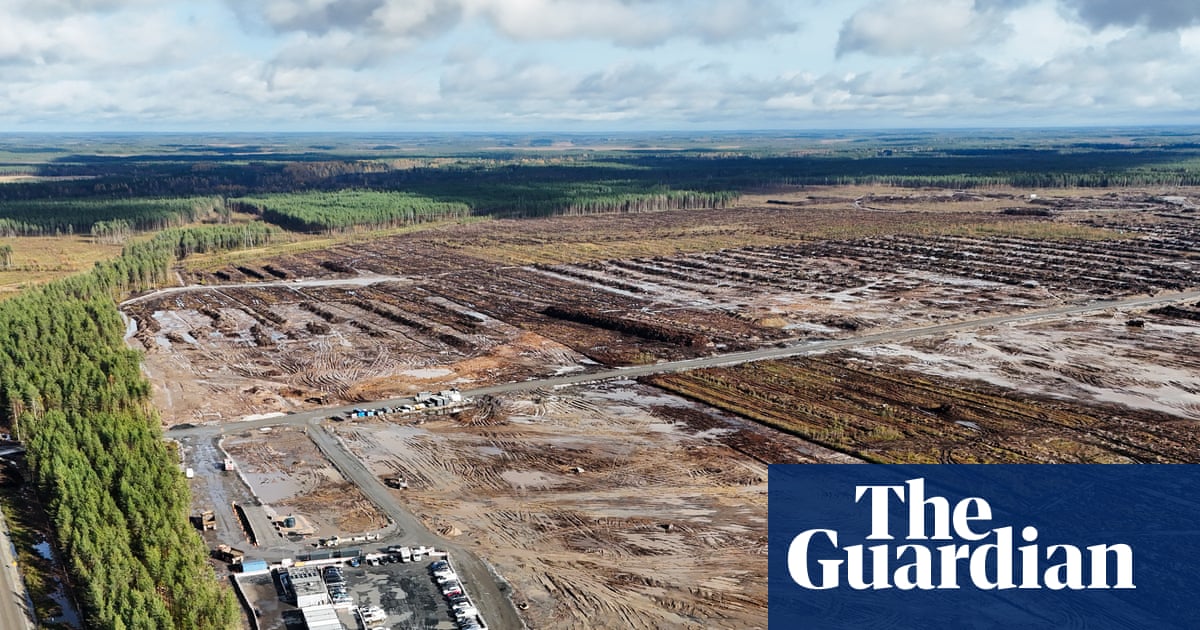
It kind of did actually, they went forward without license awaiting the results of an environmental damage assessment report. Aslo Finland is quite sparsely populated ( ~18/ km2)
The local government and law enforcement also needs to be held accountable
Yeah 100%, seems that the Finnish ( and the European) law & mindset is not ready for this sort of BS . The Finnish Gvement actually endorsed this Google investment without even thinking of the consequences. Sort of like money is always good for our country bla la. But in this case it’s actually not true, unless you really tax them/make them pay.
This story is like a warning for others what could happen one day - or maybe already has happened - in your own backyard.
deleted by creator
Like one third SK/ Asian, another third DE/ European and the last North-American. Sounds like a realistic spread, and a reasonable setup. Heard that the Abrams are high and expensive AF in maintenance, so setting up spare parts is a good step.
Progressive thinking is about always finding new ways to improve living conditions.
This 💯 %
Tbh, good point. I was actually taking a good groundwork for granted, which it obviously isn’t. But don’t negate " the story" and the message. Take also Canada’s Mark Carney as an example, and how he’s able to communicate and resonate among many people and borders with his speeches of “working together” etc.
It is possible considering these examples of inclusive, centre-oriented (not extreme right) and connecting political campaigns like Obama’s " Yes we can" and Mandela’s “Rainbow nation”.
We need some progressive parties to take this to heart and translate this message to this age, like the Dutch Rob Jetten did this year with his campaign “It is possible”, which he copied from Obama.
" Shhh. Do not mention to Trump that it is the Kingdom of Denmark that has won"
This is the title of an analysis in Danish news outlet “Berlingske”, link. Basically it says :
" The wildest thing is not the agreement itself, which the USA enters into with Greenland and Denmark. The wildest thing is that ministers, diplomats and officials have succeeded in selling it to Trump as a great personal success for the president. Make no mistake – it is a shame it is a great success for both the USA, Greenland and Denmark that the Americans »will defend security in Arctic«, as Trump writes on Truth Social.
But it is far from Trump’s wild dream of making Greenland American and expanding the American territory by annexing the world’s largest island. Instead, it has apparently succeeded in entering into an agreement where no red lines are violated. Where the sovereignty of the Kingdom is not violated and persists."
feel this just shouldn’t have gotten this far.
I agree that the US pressure didn’t help. But afaik, the Cny didn’t (really) fold. I’m confident, knowing how flexible, unscrupulous and solution-oriented most Dutch CEos are, it probably was a hardline CCP agenda which led to an untenable situation.
Here a report in the issue by the Bruegel Institute:
" The Nexperia saga illustrates how Chinese FDI operates under a fundamentally different logic to traditional market-driven investment: it is inherently conditional and reversible, based on geopolitics. When Wingtech acquired Nexperia, it wasn’t simply a private equity play. The acquisition was made possible by Beijing’s huge industrial policy push to increase its power over the global semiconductor supply chain."
Here the official Pressrelease & Ruling of the Court per June 2026. link
These kind of headlines make me say that I hope that the UK can take back the reigns. Seems like they are being sold off bit my bit, year by year to the highest bidders, while being compromised from all sides, both via the left hand and the right hand.
deleted by creator
Canada & EU are really are fast-tracking their collaborations. I am curious as to what exactly will be announced:
“Short of EU membership, the EU and Canada want to get as close as legally possible, one of the people said. The two sides have also discussed working together through the Trans-Pacific Partnership, a multi-country trade agreement of which Canada is a member.”
you immediately jump to election interference then?
Because there is and was,. Germany and other countries have been trying to cope with it for years. I just don’t know the exact details.
So, now that you know that, why did you jump to your conclusions?
I think…
Pease don’t put words in my mouth. Don’t be like the enemy if you wanna be friends.
I’m questioning the validity of this vote due to irregularities in the campaign and external interference I’d start an investigation if I were Germany.
Still haven’t seen anything about the role of the disinfo campaign here, which was afaik very sizeable, and extra info graphs about who voted what . Anyone more info?
found this DW source and NTV source.
" According to Platform Wahlen, there have been several acts of influence that can be attributed to Russian actors. Russian propaganda networks such as Operation Overload (“Matryoshka”) and “Storm-1516” attempted to discredit the candidates of the CDU, SPD, FDP, Left Party and Greens from Saxony-Anhalt."



Full translation:
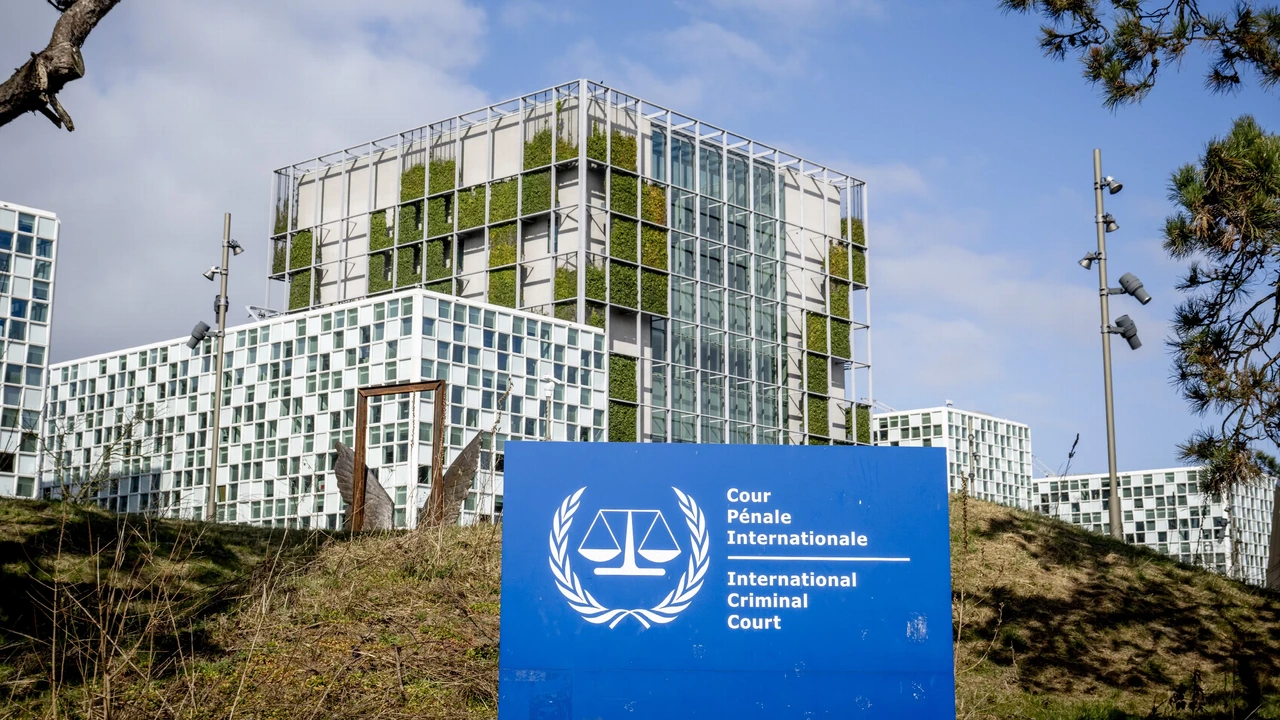
At least 20 human rights organizations have had their cooperation with the Hague-based International Criminal Court (ICC) since last year severely limited or completely discontinued.
This is evident from a tour of the research platform Investico and the German medium Süddeutsche Zeitung at a hundred non-profit organizations, in collaboration with the weekly magazine The Green Amsterdammer.
Many NGOs no longer dare to cooperate with the ICC as a result of the sanctions which the United States imposed on the ICC in February last year. For example, several human rights organizations have stopped cooperating because their contracts with American financiers prohibit them from doing so.
Several organizations have quietly stopped their work, writes Investico. This includes large organizations such as Human Rights Watch.
Restrictive sanctions
The ICC is hit hard by the sanctions, as was previously evident from research by news agency AP. US President Trump set those punitive measures in by decree, after the Court arrest warrants had issued against Israeli Prime Minister Netanyahu, among others, for war crimes and crimes against humanity.
That sanctions package consists of financial penalties and visa restrictions for people who help the ICC investigate US citizens and US allies such as Israel.
Due to the sanctions, employees no access more to their properties and assets in the US, such as money they have in a US bank account. They are also no longer allowed to purchase anything from American companies or use their services.
Recently, the Trump administration did another one there scoop on top, with new financial measures that will largely come into effect next year. In a video message, Foreign Minister Rubio said the US will ban “transactions with this unhinged court.”.
No evidence, no investigations
The organizations with strong local networks are indispensable in preparing criminal cases, as they provide, among other things, evidence, eyewitness accounts and new forms of evidence with which the Court can move forward. They are also often the first on site and can also share specialist expertise on local legislation.
“They are a very important part of our work,” former chief prosecutor Fatou Bensouda told Investico. “They’re not researching for us, but they’re providing us with tips, allowing us to find ways to back up evidence.”
Bensouda worked for the ICC until 2021 and was herself hit by US sanctions when she was on a blacklist was set.
The number of organizations that have stopped cooperation may be higher. According to Investico, many NGOs openly refuse to speak to journalists about the consequences of the sanctions.
A number of organizations did. For example, Save the Children Netherlands has announced that it has difficulty finding a new form of collaboration. The platform Forensic Architecture says to reconsider working relationship with ICC.
Fear of more sanctions
Investigations that at first glance have nothing to do with the United States or Israel are also affected. “For example, it became a European organization that conducts investigations in East Africa, the Middle East and Ukraine, banned by an American donor from using his money for the benefit of the ICC,” writes Investico.
European organizations that are not directly covered by the sanctions have also stopped cooperation. “We cannot accept the risk of being sanctioned ourselves, and that this will endanger all our other work,” a German NGO tells the researchers.