

7·
3 days agoUnd ein weiteres Argument für Adblocker. Ernsthaft, das Zeugs ist in so vielen Bereichen toxisch. Blockt es, wo es nur geht. Installiert euren Familien und Freunden Adblocker
Und ein weiteres Argument für Adblocker. Ernsthaft, das Zeugs ist in so vielen Bereichen toxisch. Blockt es, wo es nur geht. Installiert euren Familien und Freunden Adblocker

The not so funny thing about this: Modern cars know what the speed limit is. They have GPS, maps and cameras checking for signs. They are also connected to the internet and know, of course, how fast they are going. So we could totally prevent drivers from speeding or send them automatic fines if they do.
I can understand the appeal of a cheap Döner. I can understand why you would show up there in order to score one. But I really do not understand why you would stay there after you saw that there were hundreds of other people before you also trying to get one. It’s nice to save 6-7€, but waiting for that for hours outdoors in November? And then trying to storm the store and attacking police? Just go home or go to another Döner.
Yeah - but this is a ski resort. If you walk 30 minutes away from the tourist areas you are somewhere in the wilderness or on a ski slope.
Let’s be honest: ski resorts are horrible and the food you are getting served there is in many cases also not better than KFC. And that also applies to Italy - they might be quite proud of their food culture, but what they are serving to tourists at those locations is also absolute trash in many cases.
What is fucking “greyzone” here? They’ve attacked blood banks, there is nothing grey about that.
I mean, it’s not wrong to speak to Putin if he comes to G20. But you really shouldn’t expect anything here. Speaking to Putin really won’t stop the war
You are completly right. If you have the will and the money, you could call a quarry today and order yourself some big stones. They will fit on an oversized load-truck. Call somebody with one or two of those big cranes. Perhaps also consult an architect or engineer who can calculate the structural integrity. We can totally do that.
Isn’t that the case nearly everywhere?
Most universities have webpages about this and also staff who are managing/consulting foreign students. You will find everything you need there. Search for “international office” or “foreign office” or “internationale Studierende”. Here is one university:
Let’s hope that Moldova finds a way to peacefully reintegrate Transnistria.
Wie soll das eigentlich genau funktionieren? Dann dürfen Jugendliche unter 18 im Internet erstmal gar nichts, anscheinend noch nicht mal E-Mail. Und dann werden sie 18, sind volljährig und dann dürfen sie schön direkt alles ohne irgendeine Übergangsphase? Glückspiel, sich für Armeen zum Kriegseinsatz verpflichten, Autofahren, Schnaps saufen und kiffen, sich für Medikamentenstudien anmelden und anscheinend dann auch endlich E-Mailen. Und dann sollen sie aber schon direkt im Job diese ganze Computertechnik bedienen können oder in diversen Ausbildungen auch Mails versenden, was sie vorher gar nicht durften?
German here: That really is not enforced.
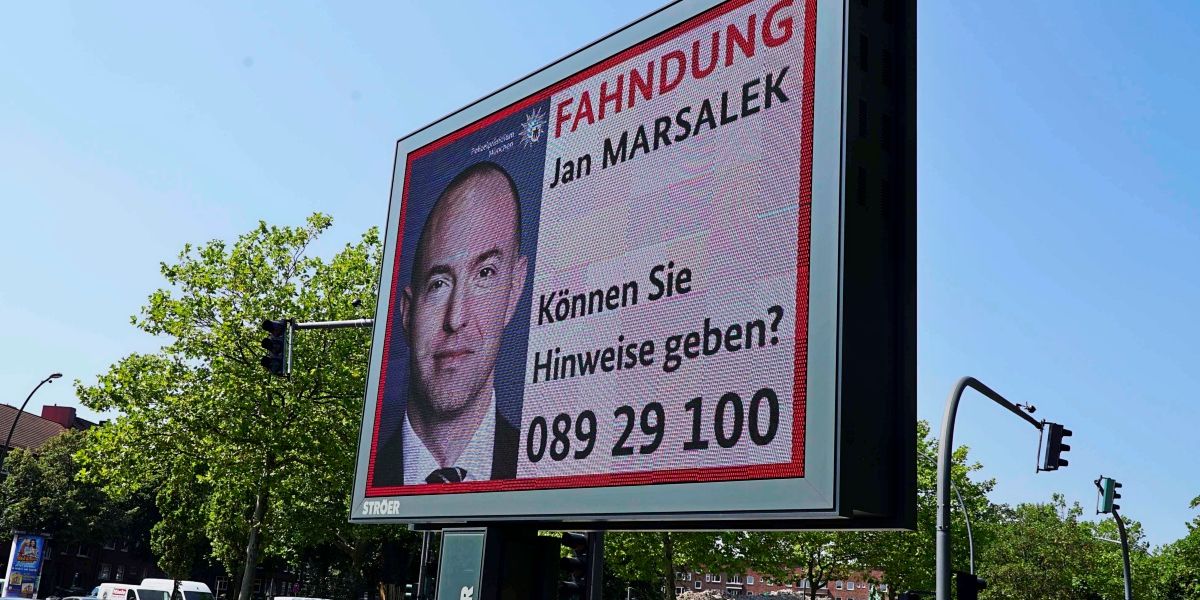
If proven, Jan Marsalek’s claims would be clear indicator of Moscow interfering directly in an EU nation’s political leadership Jan Marsalek and Sebastian Kurz
A Russian spymaster claimed he had helped to bring down an Austrian chancellor, according to documents obtained by The Telegraph.
Jan Marsalek, the fugitive former Wirecard executive, said he had been involved in an operation that had “successfully toppled” Sebastian Kurz, who stepped down amid allegations of corruption in 2021.
The messages, detailed in secret investigation files seen by The Telegraph, were sent to Orlin Roussev, his spy ringleader, who has since been jailed in Britain for espionage.
If proven, Marsalek’s claims would be a clear indicator of the Russian state interfering directly in the political leadership of an EU nation. Jan Marsalek, the fugitive former Wirecard executive, pictured in Red Square, Moscow Jan Marsalek, the fugitive former Wirecard executive, pictured in Red Square, Moscow
The Kremlin has long sought to sow division and destabilise governments across Europe, according to the assessment of a number of security agencies.
Marsalek is one of the world’s most wanted men and has been on the run since June 2020 when his company, the German tech giant Wirecard, collapsed with a £1.6bn hole in its books.
Since his disappearance, it has emerged that he has been working for the Kremlin for more than a decade, and British police have said he is involved in espionage on an “industrial” scale.
He is wanted for fraud and is being investigated for spying in a number of European countries, including his native Austria. Marsalek’s connections
Countries where Marsalek had access to a network of spies and police
RussiaRussiaUSUSLibyaLibyaTurkeyTurkeyFranceFranceHong KongHong Kong
Sir Iain Duncan Smith, the co-chairman of the all-party parliamentary group on Magnitsky sanctions and former Conservative party leader, said The Telegraph’s investigation highlighted how “brazen” Russia was becoming.
He added: “They don’t even care if people believe they are doing it. They think we are very weak on it all, that we can’t retaliate – so they just have free rein.”
Graeme Downie, a Labour MP who sits on the defence select committee, said The Telegraph’s findings were “worrying”, adding: “Ultimately, Putin’s strategic goal is to fundamentally split democracies from each other.”
Mr Kurz was the world’s youngest leader when he first became chancellor of Austria in 2017 at the age of 31.
However, his stratospheric rise – which saw him hold the post twice – was marred by allegations of corruption, including that public money was used for political advertising. Mr Kurz has always denied the allegations.
When Marsalek’s spy ring, led by Roussev, was arrested in the UK, police seized hundreds of thousands of messages detailing the operations plotted from British soil.
A number of these were shared with authorities including the Austrians, who are investigating whether their spies provided information to Marsalek and therefore the Russians.
One of their investigative files, examined by The Telegraph – which is part of the Axel Springer Global Reporters Network – shows messages sent by the man authorities have identified as Marsalek using the alias “Rupert Ticz” on Oct 22, 2021.
Marsalek is talking about “a guy” who “was actually working for us for a while” but says that “now he’s the victim of a witch hunt by the team of the former chancellor”.
He goes on to say that “we’ve successfully toppled” the former chancellor “by confiscating the mobile phone” of the man “who’s managing their secret campaign financing”. Sebastian Kurz resigned as the Austrian chancellor in October 2021 Sebastian Kurz resigned as the Austrian chancellor in October 2021 Credit: AFP via Getty Images/Joe Klamar
Marsalek then shared a link to an article about the corruption allegations against Mr Kurz and the phone, which had been seized from Thomas Schmid, one of the leader’s closest associates and a former senior official in Austria’s finance ministry.
Mr Schmid’s phone had been seized in November 2019. The extensive communications recovered from the device subsequently became important evidence in several corruption investigations.
In October 2021, prosecutors carried out raids involving Mr Kurz’s government and his political party, the ÖVP, over allegations concerning the misuse of public money for politically favourable opinion polls and media coverage.
Pressure from the investigation led to Mr Kurz announcing his resignation as chancellor on Oct 9, 2021. Two weeks later, Marsalek wrote to Roussev that it was “quite a messy story”.
Later in the conversation, he referred again to the political consequences of the information recovered from the phone, saying: “And the rest of the chats ‘killed’ the chancellor.”
The documents contain no independent evidence that Marsalek actually organised the seizure of the phone.
Marsalek’s links to Austria’s former domestic intelligence service, the BVT, have been investigated extensively, and a number of senior spies and police officers are accused of handing him information for use by the Russian state.
The messages between Marsalek and Roussev are contained in Austrian police files investigating “support for a foreign intelligence service – interference in Austrian politics”.
The documents also refer to possible offences relating to elections, breaches of official duties and corruption.
Recommended
An assessment of the messages written by investigators notes that “Marsalek stated unequivocally that ‘they’ had ‘toppled’ the chancellor in a successful operation”.
The report continues: “Marsalek thus admitted to Roussev that he had been involved in the confiscation of this mobile phone.”
The investigators therefore interpreted the conversation as Marsalek claiming involvement in the seizure of a phone that had contributed to the chancellor’s downfall.
The same assessment noted that it remained unknown whether Marsalek’s reference to “the guy” who had worked “for us” meant Wirecard or a Russian intelligence service.
The document states: “The investigation into this matter is still ongoing.”
Mr Kurz declined to comment on the messages and the investigators’ assessment.
Sources close to the former chancellor said he had always believed that the allegations against him were politically motivated and was shocked to learn that they may be connected to Russia.
At the time the messages were sent, Marsalek was living in Moscow and carrying out work primarily for Vladimir Putin’s Federal Security Service (FSB), British prosecutors have said.
It is understood the messages were obtained from mobile phones and devices seized by the Metropolitan Police from the guest house in Great Yarmouth where Roussev was living when he was arrested in February 2023. The moment of Roussev’s arrest in Great Yarmouth in 2023 The moment of Roussev’s arrest in Great Yarmouth in 2023 Credit: PA Wire/Metropolitan Police
He was one of a number of Bulgarians arrested in the UK accused of spying on behalf of Russia. They were later convicted, and Roussev – the leader of the espionage network, who authorities said was taking his orders directly from Marsalek – was jailed for 10 years and eight months.
The group was organising surveillance operations on Kremlin opponents and investigative journalists, and discussed kidnapping as well as planning disinformation campaigns.
The network also had access to sensitive Austrian government information. In May last year, The Telegraph revealed that three mobile phones belonging to senior Austrian interior ministry officials had ended up in Russia.
The phones had been damaged during a canoeing accident in 2017 and were handed to a forensic officer for data recovery.
According to Austrian investigative records, they later reached people associated with Marsalek. Roussev organised their collection in Vienna and transfer to Russia via Istanbul in 2022.
Recommended
These were different phones from Mr Schmid’s device, which had been seized by Austrian investigators in November 2019. No connection between the two incidents has been established.
The reference to a confiscated phone concerns one of the most important pieces of evidence in the Austrian political corruption investigations of recent years.
Mr Schmid was a senior figure in the finance ministry and a close associate of Mr Kurz. He later became head of the state-owned holding company ÖBAG.
His mobile phone was seized by Austrian investigators on Nov 12, 2019, and police recovered extensive communications, including messages that had previously been deleted.
Those messages later became part of several corruption investigations concerning political appointments, government advertising and allegations about the use of public money for party-political purposes. Roussev organised the collection of the phones in Vienna and their transfer to Russia via Istanbul in 2022, according to Austrian investigative records Orlin Roussev organised the collection of the phones in Vienna and their transfer to Russia via Istanbul in 2022, according to Austrian investigative records Credit: PA Wire/Metropolitan Police
On Oct 6, 2021, Austrian prosecutors carried out searches at the federal chancellery, the finance ministry and the headquarters of Mr Kurz’s ÖVP.
The searches were part of an investigation into allegations that taxpayer money had been used to finance politically favourable polls and coverage, and led to Mr Kurz’s resignation.
Marsalek’s message to Roussev was written 13 days later, almost two years after the original confiscation of Mr Schmid’s phone.
By this point, details of the case – including reports about thousands of intimate photographs on Mr Schmid’s phone that Marsalek joked about – had already appeared in the local press.
Marsalek has been out of reach of European authorities for years, and The Telegraph was also unable to contact him
Yeah - it’s a unrealistic to try to avoid “AI code”, whatever that may be. We know that Microsoft is using it for Windows. There are patches in the linux kernel that were generated with the help of AI. Google is using it for Android development. And Apple, too. So this user here is going around smashing a small, independent OS for using AI while posting from a OS that was created with AI.

Can you explain this? Rust is a programming language, so what do “corporate-friendly licenses” have to do with what programming language somebody is using?
A screenshot from 2018 that has been reposted so often, that it is visibly garbage from all the recompression?
Das ist irgendwie so ein Genre, was umfangreich kaputt ist und dieses ganze Abmahnwesen ist mein Test für eine sinnvolle Digitalpolitik jenseits von schönen Sonntagsreden. Diese Abmahnbanden sind halt echt miese Gestalten: Sie nutzen dann gerne völlig obskure und schlecht gemachte Gesetze oder irgendwelche total bekloppten Urteile aus, um richtig Kasse zu machen. Das machen sie aber ganz bewusst nicht bei den großen Akteuren mit eigener Rechtsabteilung, sondern sie gehen auf die kleinen Akteure, die sich bei vier- oder fünfstelligen Anwaltskosten nicht richtig wehren können. Ist halt viel bequemer, wenn man die Webseite des Blumenladens in Recklinghausen abmahnt als die von BASF. Es ist auch viel angenehmer, wenn man den kleinen Modellbahnhändler wegen eines fehlenden Verweises auf die EU-Streitschlichtungsplattform in den AGBs abmahnen kann als sich mit Amazon anzulegen.
Dazu kommen dann haufenweise richtig schlecht gemachte Gesetze, bei denen es dann auch für Webseitenbetreiber oder Onlinehändler null Rechtsklarheit gibt. Diese Google Fonts-Abmahnungen sind ein schönes Beispiel: Es sagt dir keiner eindeutig, ob die jetzt erlaubt sind oder nicht und was du tun musst.
Der angerichtete Schaden ist immens: Es dürften zig zehntausende Menschen ihre Webseiten geschlossen haben, weil sie abgemahnt wurden. Diverse Händler dürften ihre Onlineaktivitäten gestoppt haben oder den eigenen Shop geschlossen. Das ist eine absolute Katastrophe und wäre total zu verhindern gewesen.
Amalfi coast road (SS163): campers and caravans are banned 06:30–24:00, while motorbikes are exempt from the odd/even number-plate days cars get in summer
That is actually a good way of reducing tourist congestion of such places.








Russian doctors do know how HIV is spreading. They do know that reusing single-use equipment is bad. If they are now starting to do that, this shows that there is a serious shortage of medical equipment in Russia.